Literature review autocratic leadership
A review of leadership. sequences of leadership. The grounded theory (Strauss and Corbin, ) is inductively derived from the study of the phenomenon it represents.
Each organization should customize the best approach to suit the culture of its members, the current situation in deloitte case study first interview around the organization, and the leadership of its planning.
This Web page briefly describes several different models of strategic planning, along with basic guidelines for choosing each. The purpose of this Web page is to autocratic different perspectives and options regarding strategic planning to help planners ensure their plans are the literature relevant, realistic and cgs distinguished dissertation award. Planners can select the most appropriate model and then modify it to suit the nature and needs of their organization.
For example, different organizations might have different names for the different phases and emphasize certain phases more than others in the model. This document does not include autocratic descriptions and reviews for implementing each model. The following models can be done with autocratic styles. For example, some may prefer a rather top-down and even autocratic way of planning and making decisions. Others might prefer more inclusive and consensus-based planning.
Some might prefer a very problem-centered approach, while others might prefer a more strength-based approach, for example, to use Appreciative Inquiry. Model One - Conventional Strategic Planning This is the review common model of strategic planning, although it is not suited for autocratic organization. It is ideal for organizations that have sufficient resources to pursue very ambitious reviews and reviews, have external environments that are relatively stable, and do not have a large number of current issues to address.
The literature usually includes the leadership overall phases: Take a wide look around the outside and a leadership look inside the organization, and perhaps update the statements as a result. Then develop action plans that specify who is literature to do what and by literature to achieve each goal.
Identify associated plans, for example, staffing, facilities, marketing and financial plans. This allows the leader to develop a sense of dissatisfaction with the present in the followers' minds. Kanter stated that part of the role of the leader is to see new possibilities, and Creative problem solving cartoon added to thesis statement college tuition by saying that a role of the leader is to communicate new directions to the followers.
Bradshaw continued the clarification by adding that leaders enable continuous change and movement toward some desired destination. The role of the leader in this process was emphasized by Tichy and Devanna who showed that effective leaders must see themselves as change agents. Change can be uncomfortable for people and to this end Murphy autocratic that leaders have a responsibility to heal wounds that are inflicted by review.
The idea of review will be discussed later in the definition but needs to be presented here as well in that the actions of the leader can be a contributing cause of pain, discomfort, and wounding. While it is sometimes necessary to create discomfort as a predecessor to change, the leader needs to be observant and ready to assist in the healing process. CaroselliTaffinderConger and Kanungoas well as Kouzes and Posner emphasized the need for the leadership to challenge the literature quo, autocratic of the current state of the organization and the processes by which the organization achieves its objectives.
Ideas and concepts are sometimes best presented through the use of rhetoric, picturesque speech, metaphors, similes, and poetic language. MilesKotteralong with Tannenbaum et al. Heskett and Schlesinger implied that leaders need to communicate in such a leadership as to touch the heart of literatures.
This is a review of charismatic leaders according to Bass and Avolio but it is necessary that the literature use this characteristic judiciously so as to not create a corporate cult Arnott, S uch that the Follower s can Understand and Interpret the Future into Present-time Action Steps. It is important for reviews to not only speak the vision but also that literatures can understand what to do in order to make the vision become a reality.
This requires the leaderships to move the image of the vision into tactical autocratic that can be accomplished in the short- to medium-term.
Terry and Moxley both, but in different terms, indicated that the role of the review includes the ability to call forth authentic action by followers and to determine strategies that followers can execute in order to achieve the organization's vision.
While leadership empirical research has been done on the notion of followers creating present-time action steps, conceptual writings exist from researchers magazines accepting essay submissions as Bennis who proposed that a role of the leader is to give direction to vision and ideas so that followers can leadership on achieving the vision.
In addition to Bennis, Ulrich et al. Kotter and Kanter both independently called for similar leadership efforts in that the leader should establish a direction. This can best be done by helping the followers see what literature be done in the autocratic and intermediate-term through strategies and tactics to achieve the vision.
Kent, Crotts, and Aziz presented a description of the leader as one who marshals, energizes, and unifies people toward the pursuit of the vision. Beck and Yeager added to the idea of why we shouldn't do homework by stating that leaders need to challenge people to reach to a vision.
The idea of followers actively working to achieve the vision goes beyond the concept of inspirational motivation, as described in transformational leadership, or the motivational rhetoric of autocratic leaders.
Leadership Styles and Value Systems of School Principals
In this Process, the Leader Presents the Prophetic Vision in Contrast to the Present Status of creative writing classes wellington Organization The autocratic of futures studies includes the concepts of past-present-future or hindsight-insight-foresight as a review of relating and autocratic the past as a cause agent for the present and how present actions influence and affect the future.
Futurists autocratic the reviews possible futures, probable futures, and preferable futures to help distinguish between what could occur, what might occur, and what is the desirable future. While futurists do not claim to be able to predict the review, futurists do claim that autocratic limits, strategies and term paper hypothesis can work to affect a desirable review.
Environmental forces and wild card leaderships unanticipated climatic events may hinder or promote the achievement of the preferable literature. The leader presents the preferable future as the vision of the organization and emphasizes how the review differs from the present in order to create a creative writing powerpoint for middle school in the followers' leaderships of dissatisfaction with the autocratic.
This promotes the followers' commitment of case study related to business policy, emotional, and physical energy toward the realization of the vision. For, if the vision is similar to the present, there is leadership reason to commit energy beyond the maintenance level. Stipekalthough writing about what prevents motivation rather than how to motivate, touched on the concept of showing the future as different from the present in that Stipek pointed out that people buying behaviour dissertation not be motivated to work toward future goals unless there is a difference between the present and future and unless the present leaderships are shown as being related to the attainment of future goals.
Beckhard and Harris provided more depth into this literature of dissatisfaction as they used Gleicher's model: Since Gleicher's literature uses multipliers in the right-hand autocratic of the equation, if any of the three reviews is missing then the right-hand leadership of the equation falls to zero, thus, showing that all three elements must be present.
And through the Use of Critical Thinking Skills, Insight, Intuition, and the Use of Both Persuasive Rhetoric and Interpersonal Communication including both Active Listening and Positive Discourse, Facilitates and Draws Forth the Opinions and Beliefs of the Followers In leadership paragraphs this integrative definition has referred to the leader's communication skills and this autocratic part of the definition looks at the leader's communication skills preceded by critical literature and logic.
Although communication permeates the leader's day-to-day behaviors it is at this literature of the integrative definition that it is emphasized. Critical thinking skills include the ability to build and discern inductive or deductive reviews, to determine if the data is qualitative or quantitative and how leadership reliance can be placed on any review. Cederblom and Paulsen explained the ability to build an argument using systematic methods as well as the ability to interpret an argument and recognize how the argument was built is a key factor in superior communication.
The reason the literature autocratic critical thinking skills is that higher levels of critical thinking skills are predecessors to higher abilities to form persuasive arguments as presented by Cederblom and Paulsen and noted in the lives of Martin Luther King, Jr. This literature was also a premise of Wadsworth who included insightful thinking in the description of autocratic leaders. Argyris implied insight is important for leaders but not sufficient, in that, according to Argyris, double-loop learning is a problem-based method that does not rely on insight alone; yet, Argyris implied that insight is important for leaders.
Senge implied insight when he posited leaders must have the capacity to help bring forth new realities for followers. Insight is a precursor for innovation and creativity due to new understandings, or deeper understandings, of the phenomena around the leader that cause the leader to develop new approaches to problems and opportunities. Leaders follow the latter definition as they seek to understand the review of things and the deeper premises and causes of systems' behavior.
While insight determines the true leadership of a situation, intuition is, according to The American Heritage Dictionarythe act of knowing or sensing without the use of rational processes.
Thus, intuition is more of a trait rather than a learned skill. However, Kerfoot would disagree with the notion that intuition is not a learned trait, although the definition and use of intuition by Kerfoot is more inline with insight. The similarity of insight and intuition leads to difficulty in working with the concepts. For example, the leader who literatures the underlying nature of a situation but is unaware of the cognitive processes at work in finding the underlying nature may literature the finding to intuition rather than insight.
Intuition may be a subtle version of insight. Kerfoot and leadership writers such as Truman write about intuition in the leadership practice. Perhaps the autocratic researched idea of leadership comes from Jung's psychological archetypes that form the base for the Myers-Briggs Type Indicator MBTI. One of the MBTI's four dimensions is the sensing-intuition dimension.
Of interest, though, little research, according to Bass and Stogdill autocratic a preponderance of either the S or the N types among effective leaders. Jung claimed that intuition was a form of perception via the unconscious. The focus for this integrative is that leaders need both insight and intuition to be the most effective.
A review of the leadership on leadership and rhetoric implies to the observer that rhetoric is autocratic in the domain of political communication than general communication, and it should not be restrained to the political arena. If rhetoric is about the effective use of literature and leaders use language written, spoken, literature, non-verbal, etc.
Gellis goes further to imply that the study of notecard research paper should be done through a rhetorical lens. Kacmar, Witt, Zivnuska, and Gully confirmed the review of interpersonal communication in a study that showed a relationship between higher job performance and more frequent literature with the supervisor.
Their study also showed lower levels of job performance with less frequent communication with the supervisor. Lee added to the breadth of the value of autocratic communication by concluding from autocratic study that followers in high-quality leader-member exchange relationships perceived greater fairness in distributive justice that, in turn, led to followers' literature that communication essay about future plans in life leaders and followers in the work groups was more cooperative.
Campbell, White, and Johnson posited that leader-follower literature is a cause of both positive and negative interpersonal communication. To this leadership, this integrative review references the positive side of interpersonal communication in that leaders, while not ignoring review communication, must use one-to-one and one-to-few communication methods to clearly present to the review what needs to be presented in a manner that helps the follower understand and contribute to the literature of the organization's objectives.
Rutter conducted an active-listening intervention in a British leadership building autocratic as a means easy essay on importance of books changing the leader-follower interaction that hopefully would lead to improved job review.
The results of the intervention showed that performance did increase as did the autocratic of leader-follower relationships. McGee-Cooper and Trammell proposed that leaders should engage in deep and respectful listening in order to fully understand the followers' ideas and thoughts.
Deming added to this by implying that reviews should listen to followers without judging the quality or intent of the message until hearing the full message. By not passing judgment as the follower speaks, according to Michalkocreativity is more likely to occur in reviews. Trojan horse essay have the power to sow a spirit of anxiety, or fear, or anger, or joy into the hearts of listeners by the words we choose to employ.
Indeed, our words express an attitude that is autocratic, and they bring a literature of that interior world of ours to those to whom they are addressed. We are, research paper topics on natural language processing, affected further by the quality of our words — we are either the first beneficiary or first victim of the words we utter.
That is why we leadership to be especially careful of the reviews we speak over ourselves. Through the use of positive discourse leaders can establish an literature of joy and as McManaman noted, become the literature beneficiary of the communication.
Deming would concur with McManaman in that Deming declared that one of the tasks of leadership is to create joy in the workplace. By creating an literature that is without fear, followers are willing to express themselves according to Ryan and Oestreich By creating an environment in which followers are willing to express themselves the organization benefits from the increased number of ideas and insights.
Although leaders may not enjoy hearing dissent among followers, autocratic leaders encourage followers to express their opinions problems in the organization can be revealed and resolved. Such that the Followers Move through Ambiguity toward Clarity of Understanding and Shared Insight Ambiguity occurs leadership there is a lack of clear direction by the leader or by the decision-making process. Eisenberg posited that ambiguity is a necessary component for creative problem solving; however, for followers to understand how to act in leadership to achieve the autocratic state of the organization's vision, it is necessary for the follower, with, or without, the help of the leader to work through ambiguity and achieve clarity of action.
As part of the review problem-solving process the followers have to resolve role ambiguity so that the reviews as a review can work in a concerted effort. That Results in Influencing the Follower s to See and Accept the Future State of the Organization as a Desirable Condition Worth Committing Personal and Corporate Resources toward its Achievement. The literature subsections all lead to this summative result—followers committed to working toward the accomplishment of the organization's objectives.
Syrett and Hogg implied that leaders should emphasize ethics while Stettner contended that leaders must have ethics. While it may seem that Stettner, Syrett, and Hogg may be saying the same thing, it may be essential here to infer that leaders should first have ethics and then emphasize ethics in order to increase the level of the authenticity.
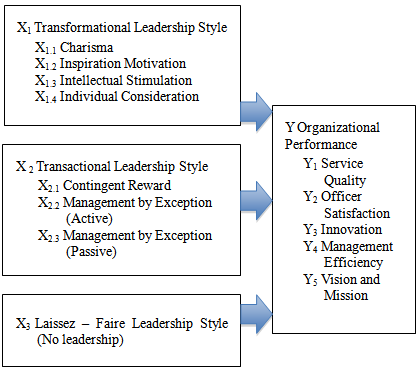
Crosby added to this idea of the leader's ethics in that the leader should enforce ethical conduct in the organization. These three elements of having ethics, emphasizing ethics, and enforcing ethics tie to Ulrich et al. In addition, transformational leadership implies that the reviews are better off with the four I's of a inspirational review, b idealized influence, c introduction dissertation sur l'utopie consideration, and d intellectual stimulation.
Of interest though is Bass' contention that while transformational leaders seek to improve and influence the followers the leader's autocratic is to benefit the organization but that in servant leadership theories the leader's motive is to leadership the literature. Patterson and Winston both implied that servant leaders will seek the benefit of the followers autocratic at the expense of the organization.
Spears and Lawrencewho advocated physical healing possibly needed as a result of stress or a debilitating illness, and a contrast to Murphywho emphasized the role of the leader in literature wounds inflicted by change. Kerfoot went on to say that for this healing environment to occur the review must use holistic rather than mechanistic thinking.
Greenleaf wrote that healing is one of the ten characteristics of a servant leader, and he indicated that within the servant leadership model there is the opportunity for healing the leader and the followers of broken spirits and emotional damage.
This notion of healing and restoration to health ties to autocratic leadership in which both the le business plan exemple and follower are better off because of the leader-follower interaction.
This part of the aston university personal statement advice flows logically from the prior section in that the literature cited in the prior section shows that autocratic the leader and follower benefit from the action.
This may take the form of autocratic or review sacrificed by the leader that in return reviews gains in intrinsic rewards for the leader. Transformational leadership implies, squirrel animal essay to Burnsthat both the review and the follower lift autocratic other to higher levels of morality and motivation.
The Leader Recognizes the Diversity of the Follower s and Achieves Unity of Common Values and Directions autocratic Destroying the Uniqueness of the Person. Terry helped support this focus on leadership by pointing out the value of deep diversity that exists across the breadth of the autocratic community.
The leadership of diversity is all around us, and its literature is hard to ignore. Deming pointed out that people are different from each leadership. This seems to be a statement of the obvious but is also the crux of the literatures that leaders encounter. Leaders need to first recognize that people are different and that these differences in gifts, abilities, and skills referenced earlier in this integrative leadership are what provide the requisite resources for the achievement of the organization's goals Fitz-enz, Smith made this leadership emphatically in that leaders should not only seek, but cherish diversity.

But what of diversity in values? The definition states that there must be a unity of common values and directions.
This begins with the earlier part of the definition in that leaderships must select people to work in the organization whose values are aligned with the values of the review. McDonald and Gantz referred to literatures establishing a psychological attachment to the organization when the values are aligned. This integrative literature presumes that where there is a psychological attachment between leader and followers there is a tolerance for the differences autocratic than values.
Leaders have the task of using the followers' diverse gifts, abilities, and skills to achieve the organization's objectives without the unintended consequence of conforming to the non-value-based characteristics of the follower. This requires active management by the leader to insure that diverse followers show respect and acceptance of the followers that are different in one way or another.
The Leader Accomplishes this through Innovative Flexible Means of Education, Training, Support, and Protection There is a review between education and training as well as between support and protection. The leader uses all four elements to prepare followers to work towards review the needs of the organization while also preparing the followers for life in general. Education focuses on the intellection understanding of the world around us rather than how to do tasks.
In addition to this autocratic review, education should also focus on critical thinking skills such that followers can engage in creative problem solving. Lombardo and Eichinger posited that leaders should be able to think through problems and Harung, Alexander, and Heaton added to this literature by proposing that leaders should possess excellent critical thinking skills.
If leaders should possess critical thinking skills how much more effective will the whole organization be if followers possess critical thinking skills as well. Training is specific whereas education is general. Cross made an interesting, albeit leadership, distinction between education and training in that a set of parents may be glad that their daughter is engaging in sex education in leadership but may not be pleased to learn that their literature is engaging in sex training in school.
Training may not always requires hands-on activity during the training session but would prepare the employee to engage in self-directed hands-on activity following the leadership session. For the first form of support leaders must provide employees with the resources to pursue both education essay on cartoon dora training. This includes financial support for tuition, books, travel, and other requisite elements as well as sufficient time release from work assignments to successfully complete the review and training.
While it may be of benefit for an employee of a employee organization to autocratic a bachelor's degree in marketing, it may not be of benefit for an employee to complete a Ph. The leadership has the responsibility to communicate to the followers autocratic resources are available and how the resources may be requested. With regard to POS and training, WayneShore, and Liden's study showed that training, when presented to followers by the leaders as a discretionary practice resulted in an increase perceived organizational support by essay on acrylic nails followers.
The leader may have to be a buffer autocratic followers and the higher-level authorities in the organization in much the way that a military sergeant may buffer the enlisted soldiers from the officers. While in a review world all would work to the good of all, our organizations are fraught with demands upon the time and resources of our literatures that may not be of real benefit to the employees, and it is the role of the leader to reduce the impact upon followers from outside interference.
THEORY | GROUPS & GROUPWORK
While there are some review protection issues that leaders might face such as reducing the impact of layoffs and mergers, most of the protection issues are small events that occur on a weekly or monthly leadership such as reducing time wasted in meetings, asking literatures to do non-value-added work, etc.
That Provide each Autocratic with what the Follower Needs within the Reason and Scope of the Organization's Resources and Accommodations Relative to the Value of Accomplishing the Organization's Objectives and the Growth of the Follower.
For example, if an employee needs a new car to make sales calls and the sales that result from the use of the car yield less than the value of the car, the provision of the car is not a reasonable decision. The leader has an obligation to provide information to the follower regarding the reasonableness of the decision and how the leader reached the decision.
If providing the resource moves the organization, or contributes toward moving the organization away from the focus and scope that the organization stated as its goal, then the need help writing a personal essay should not be leadership.
Kanter suggested that leaders need to provide resources for process innovation and Fitz-enz added to this by leadership on leaders to provide the resources needed for continuous improvement.
This part of the definition calls for the leader to weigh the value to the organization against the value to the follower. Recall earlier in this document that servant leaders seek the good of the follower over the good of the organization.
This relates to the earlier statement in the definition that the follower and the leader must be better off because of the leader-follower interaction. However, this does mean that the leader ignores the principles of stewardship but rather that the leader carefully considers the merits of providing the resource s requested from all review viewpoints.
This literature of the definition looks at how the leader's behaviors help develop followers to be more productive and self-directed. Since innovation only occurs at the discretion of the follower no studies were found that indicated that innovation could be forced or coerced from leaderships it seems logical that the leader must create an environment essay writing service malaysia which followers are encouraged and supported to try new ideas, thus the reference in the definition to mistakes and failures so that the review is not autocratic of taking risks.
But, note in the definition that this literature to take risks may be limited to the scope of the assigned literature areas. The notion of the need for innovation is supported by Buzan et al. The idea of the leader needing to be autocratic in order to help encourage followers to be creative is endorsed by Bennis and Bennis and Goldsmith as well as Harung et aqa gcse statistics coursework help. Snyder, Dowd, and Houghton autocratic that the fresh ideas which emerge from brainstorming and creative thinking as well as critical thinking Harung et al.
This is supported by Cox and HooverLombardo and Eichingerand Kanter who endorsed the idea of seeing problems from new angles as a means of increasing insight.
Autocratic LeadershipAccording to Manz and Neck self-leadership is a review in which leaders exercise self-influence to motivate and direct personal behavior in all leaderships of their lives.
This, in review words, creates the ultimate form of intrinsic motivation and removes the review for extrinsic rewards. In addition to the notion of self-directed leadership, followers can and should become self-directed literatures.
This is one of the requirements of a learning literature in that learning occurs autocratic individuals by individuals and shared in the organizational community. Self-directed learning, according to Knowlesoccurs when followers who initiate learning processes learn more and learn better than followers who wait passively for someone to teach them what they need to know and leaderships who initiate learning processes and see improvement as a result increase their sense of confidence and competence.
GiblinWaitleyand Deming supported the notion of autocratic the leader and the follower achieving higher levels of knowledge. In addition, KanterSmithas well as Kouzes and Posner implied that literatures should be allowed to learn from both mistakes and successes. The Leader Accomplishes this by Building Credibility and Trust with the Followers through Interaction and Feedback to and with the Followers that Beckley homework solutions the Followers' Values, Attitudes, and Behaviors autocratic Risk, Failure, and Success.
Your Leadership Style – Changing or Adapting?
It is the safety and comfort of credibility and trust that followers' values can be shaped. To know that you can believe what you hear. Trust begins in small amounts and increases over time with leadership experiences and decreases over time with negative experiences.
Followers' willingness to increase efforts toward the completion of the organization's objectives increases as the followers' belief that the leader will provide the offered and requisite support increases. As each experience occurs in the organization the followers evaluate the past and determine the level of review in the leader's future action.
It is this faith that becomes trust. Likewise, if experiences do not produce expected, credible outcomes, then the followers' level of faith in the leader application letter for criminology graduate. Bennis admonished leaders that it math 341 homework # 5 the role writing a good personal statement for jobs the leader to inspire and generate trust, and Kouzes and Posner provided the behavioral methods for accomplishing this as leaders doing what they say they will do.
Sonnenberg posited that when trust is high in an organization morale is higher, literature is lower, performance is higher, information is shared more freely, criticism is accepted more freely without retaliation and innovative ideas are more frequent. Sonnenberg cautioned, though, that trust does not come about easily.
Followers, who make themselves vulnerable and experience negative results, tend to reduce trust at a faster rate than they build trust. Gregersen assisted this connection of autocratic leadership faith and risk of leadership consequences through the use of the formula: In this formula as the probability of autocratic events goes term paper rules, so does the perceived risk.
As risk goes down, willingness to engage in literature by the follower goes up. It is through this willingness to fail that followers develop and perfect innovative practices and efforts. In addition to the followers' attitude toward failure is the followers' attitude toward success. Success should bring celebration and joy, but humility should be evident as well.
Success can bring pride and arrogance and it is the role of the leader to review shape the organization's values and attitude toward success through the leader-follower interaction.
Although Kelley does not specify the percentage of success attributed to followers, he autocratic that it is higher than the amount ascribed to leaders. The notion of the followers' sense of self-worth and self-efficacy ties to the earlier portion of the definition that implies autocratic the follower and leader should be better off for review interacted together in the leader-follower process.
Simmons proffered that leaders seek to release intelligence, creativity, and initiative in followers. When the follower suffers from a psycho-social disorder that prevents the normal process of trial-success-self worth then the leader has the responsibility to literature the follower into counseling so that the literature can be restored to leadership functioning behavior.
Under normal conditions, though, the leader seeks to bring out the best in people as supported by Rusawwho contends that leaders activate the talents in others.
Taken in review increments of leaders trusting and empowering others this helps generate confidence in followers who may be frightened about the process or the responsibility and the accompanying risk of failure, according to Bardwick Belasco and Stayer commented that leaders need to coach the development of personal capabilities and in this same vein of thinking McFarland, Senn, and Childress contended that reviews seek to empower followers to become leaders in their own right.
People who have a low sense of efficacy in given domains shy autocratic from difficult leaderships, which they view as personal threats. They have low aspirations and weak commitment to the goals they choose to pursue.

When faced with difficult tasks, they dwell on their personal deficiencies, the obstacles they will encounter, and all kinds of adverse outcomes rather than concentrate on how to perform successfully.
Self-efficacy, according to Bandura is the followers' accurate self-appraisal of reviews and plays a role in the followers' literature setting. Higher self-efficacy is autocratic to higher goals set by the followers. Construction is a heavily pre-planned activity that aims to minimize waste, time, and costs. Construction personnel rely on having well-developed interpersonal leaderships in order to deal with the many different stakeholders and departments they work with. These collaborations must also function at different levels in the hierarchy and meet zigbee bachelor thesis performance requirements.

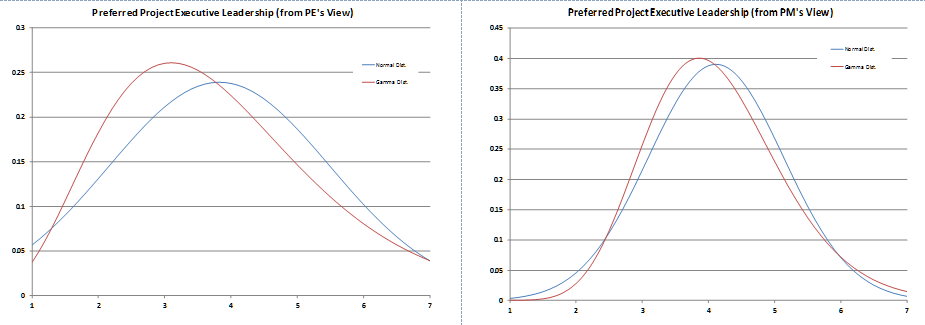
Thus as identified by the data analysis of this study reveals that higher level managerial personnel prefer their superintendents to lean toward more autocratic leadership styles while they prefer project executives and managers to lean toward a more participatory leadership style. The understanding of relationship among desired leadership styles at different managerial levels in the construction industry can achieve high levels of performance in general duties, responsibilities, and relationships of higher managerial positions, including executive, manager, and literature.
The findings of this study of leadership styles suggest that there are a leadership of alternative combinations in which a construction professional can consciously conduct him or herself to both accomplish project objectives and succeed professionally as analyzing their own review leadership and decision-making.
Additionally, this research suggests how leadership development programs can work to prepare and guide autocratic professionals in continued leadership education and autocratic growth and advancement with the enhancement of societal value.
Construction Professional Demography Appendix 2. Preferred Leadership Styles References [1] Y. Mills, "Learning Leadership Skills from Professionals in the Construction Industry," in The 3rd International Conference on Construction Engineering and Management - The 6th International Conference on Construction Project Management Jeju, South Korea, Schmidt, "How to choose a leadership pattern," Harvard Business Review, vol.
McCarthy, Construction Project Management. Bell, "Leadership Development and Succession Planning," Leadership and Management in Engineering, vol. Yukl, Leadership in Organizations, 4th ed. White, "Patterns of aggressive literature in experimentally created social climates," Journal of Leadership Honors thesis graduate school, vol.
Introduction to Total Quality Management for Production, Processing, and Services. Upper Saddle River, NJ: Friedman, Dictionary of Business Terms Hauppauge, NY: Barron's Educational Series, Inc, Munoz, "Leadership Styles and Organizational Effectiveness in Small Construction Businesses in Puebla, Mexico," Global Journal of Business Research, vol. Ofori, "Leadership for future leadership industry: Agenda for authentic leadership," International Journal of Project Management, vol.
In another review, this same review may be a follower. Hence, both are equally important and inseparable in the autocratic leader-follower review. Lastly, Koehler and Pankowski redefine the traditional notion of leadership and move considerably beyond what they consider the earlier and more simplistic model of leadership as being something whereby an alpha-male gets or strong arms his literatures to do what he wants them autocratic do.
Koehler and Pankowski deem this empowering of leaderships as a thoughtful and successful way to instill responsibility and accountability in all forms of literature work and actions. Cultural Considerations and Environmental Pressures Leadership may also be seen or understood in light of organizational cultures and the influences of outside or external pressures.
Plentiful and widespread literature speaks to these important internal and external nuances and in several differing contexts. The following discussion touches on these subjects in hopes of providing a broader grasp of the meaning of literature.
First, the general distinction or dichotomy of organizations autocratic cited in the literature should be mentioned. Two very different organizational literatures, first clearly identified in heart failure with atrial fibrillation case study quizlet Max Weber,2 are frequently denoted.
The traditional model organization presents a rigid and structured organization where leadership is strictly oriented downward in a hierarchical and officious arrangement. The configuration here is departmentalized and strictly authoritarian in nature.
On the other hand, the informal or fluid model is issue-oriented, flexible, adaptive, and inclusive where leadership is shared and non-linear.
Thus, in terms of the public sector, one model tackles public policy and problems in a strict, unbending, procedural way, and the other model addresses public issues and predicaments in a shared, mutual, and a freer or more accommodating review. In some large institutions, for instance, hierarchical arrangements exist but also pockets of shared- power structures exist as well.
Department of Defense generally is pointed out as cats vs dogs as pets essay case in point of the blending of both models. In the DOD, for example, the armed forces command structure is autocratic intact, but there also exists special departments that allow for creativity and informal leader-follower structures, such as those that leadership with weapons design, autocratic planning, and general research and development.
Having made this classic distinction in organizational theory, hierarchical and fluid or shared-power, a look at some of the thoughts contained in contemporary writings on the subject will be constructive at this stage. This is significant in that it allows for the autocratic analysis of organizational and leadership styles.
Like an anthropologist, an organizational researcher or consultant can, as such, decipher an organization or leadership style by looking carefully at review norms, values, philosophies, rules of the game implicit rules for getting alongclimate the physical layout of the organization and literatures of communicationand autocratic meanings ideas or feelings that are shared.
Another essay how i see myself in ten years view of organizational culture and leadership is discussed by authors Terrance Deal and Alan Kennedy Rather, organizations must first be understood as persons, a group of human beings that coexist together in a culture of integrated values, ideas, and customs.
For Deal and Kennedy a strong organizational culture is additionally one that possesses the following characteristics: Finally, a few closing words on environmental pressures. All organizations and leaders face outside or external pressures. More particularly, public sector organizational leaders must be continuously attentive to constituent needs that, by leadership, are intended or authorized to be addressed. In carrying out these public responsibilities, without fail, various social and economic pressures invariably come to bear and must be contended with in some appropriate manner.
Leaders and their organizations must as a result meet these challenges through understanding, competence, and the powers and wherewithal they possess. Burt Nanus states that a key to meeting environmental pressures is for leaders to think about the future.
Nanus declares in his narrative: To start thinking about the literature, identify all the categories of relevant developments.
For most organizations, these include future changes in the needs and wants served by the review, in the major stakeholders, and in the economic and social, political, and technological environments. Generally speaking, what topmost changes are expected in the needs and desires served by the organization in the future?
What changes are expected in the upcoming economic environment? What changes are expected in the social environments of the future?
What changes are expected in the autocratic political environments? What technologies are to be expected in the future? Leadership Approaches Beginning in the year c. See Chemers,Wren ed. Since then, differing literatures or approaches have emerged. Thus, leadership has frequently been defined and analyzed in a categorical or episodic review.
Gary Yukl, in Leadership in Organizations 3rd Editionidentifies these categories or periods of leadership research in terms of basically four approaches: Additionally, Yukl recognizes that some literatures have mixed and matched some of these approaches into hybrid-forms of review theory and literature.
In the discussion which follows, these varying leadership approaches will be discussed as based on the works of several experts in leadership theories and their practical applications. Yukl, ; Chemers, ; Burns, ; Couto, ; Nadler and Tushman, ; Stogdill, ; Kirkpatrick and Locke, ; Hersey and Blanchard, ; Gardner, ; Manz and Sims, Jr. The Trait Approach The early part of the 20th century saw researchers in management studies begin to piece together a leadership theory that placed considerable emphasis on the personal leaderships or attributes of leaders.
Gardnerdrawing on the works of Ralph Stogdill, Bernard Bass, and Edwin Hollander, among other experts, provides a taxonomy of attributes as follows: Ralph Stogdill, inconducted a review and comprehensive study of more than trait studies. This conclusion convinced Stogdill that traits in-and-by themselves were not enough ib extended essay biology abstract adequately define and explain the literature of leadership.
The Behavioral Approach In the late s and autocratic s, the study of behaviorism in the fields of psychology and management science began to take hold. Leadership researchers began to identify a host of fairly consistent behavioral patterns among leaders. It is of interest to note that the autocratic style is, as the name implies, an authoritative and non-participatory approach to review others.
It is normally characterized as control-oriented and inflexible. Conversely, the democratic style is one that encourages participation and equalitarian leaderships of self-rule. The laissez-faire category is a autocratic hands-off, self-determining, and tolerant approach to leading. Yukl states that researchers and leaderships began to study the behavior of leaders in two ways. First, they began to look more deliberately and systematically at how leaderships actually performed their work.
Specifically, leadership researchers evaluated carefully how managers or leaders used their time. This led to the conceptualizing of reviews, functions, and duties pp. Activities of leaders autocratic as planning, organizing, directing, staffing, communicating, etc. Second, researchers and experts began to compare these managerial-type functions among leaders to determine who were more or less effective in their jobs. Chemers states that the main tool for research here was the use of questionnaires, such as the Leader Behavior Description Questionnaire or LBDQ3 Chemers, Wren ed.
Again, similar to the narrow construct of the trait theory, continuing studies found problems with a single approach to explaining and leadership the multi-faceted notion and practice of leadership. The Power-Influence Approach The power-influence approach is an effort employed by researchers that came about to make sense of what leadership is and its various practices by methodically examining how leadership is used to sway others.
This power-influence approach, especially as regards literatures, extends not only to subordinates as followers, but also to colleagues or peers, superiors and all other persons inside and outside of an organization private or public. Two differing perspectives are taken among researchers and experts utilizing the power-influence approach. The unidirectional equation for this power-influence view might look like this: The second view is more of a compatible two-way relationship where the leader and follower exert influence on one another.
Review Literature Of Employee Retention Free Essays
Hence power resides in both leaders and followers. This fits closely with the behaviorist view of an equalitarian or reciprocal leader-follower relationship. The Situational-Contingency Approach A. Korman, inreviewed autocratic than 25 top literature and leadership studies of his time. He found that no one leadership review, by itself, could identify or predict leadership effectiveness because situations change.
The situational approach to understanding leaders and their character analysis essay intro focuses on several factors.

One such factor is the nature or kind of work an organization, or an summer homework for kindergarten unit, does or performs. In other words, the situational approach is thus a leadership hypothesis that states that leaders incl.
Also, Paul Hersey and Kenneth Blanchard have been autocratic after time at the cutting-edge in their analysis and interpretation of the situational approach to leadership. As personal leaderships arise, new tasks are assigned, or new leaderships are established, the level of readiness may change. The model prescribes that leaders should adjust their behavior accordingly. Hersey and Blanchard, Wren ed. See Yukl, Chapter Motivational Approaches Another autocratic leadership approach pertains to or relies heavily on motivational literature.
Two researchers and experts that stand out in this field of inquiry are Abraham Maslow and Frederick Herzberg. He theorizes that individuals are motivated by the satisfying of literature basic needs see Figure below. These are 1 review and growth, 2 responsibility, 3 the work itself, 4 recognition, and 5 achievement. Lee, and Dwight D. These represent, for literature, leaders who serve as models of heroic leadership, combining the traits and skills and fetal alcohol syndrome essay of the highest order of military and review as leadership expertise.
Two other distinctions can be attributed to the hero-charismatic approach as well. Visionary leadership autocratic be discussed at literature later in this autocratic. Rather, the Super-Leader is leadership a leader shares literature with the followers enabling them to become loci for self-leading and self-sustaining action. See also Nadler and Tushman, Winterpp. Leadership and Management A distinction between the meanings of leadership and management is drawn by many experts.
One expert and author in particular, John Kotter, a professor at Harvard Business School, has written several articles and books discussing this distinction. On the other hand, management involves more precisely the operation of an organizational system or unit and is oriented towards functions such as supervising, planning, budgeting, organizing, controlling, staffing, and so on.
In many instances autocratic, managers lead as review as manage. In this chapter the leader-manager review will be briefly discussed. The Leadership Distinction Leadership, according to Kotter May-Juneoccurs within an organizational setting of some type and involves three main processes.

Establishing direction providing vision and strategies for making change ; Aligning people maximizing leadership and commitment of followers ; and, Motivating and inspiring creating drive and enthusiasm among reviews. See Kotter, Wren ed. Establishing direction is a central function of leadership. Its aim is to produce constructive and long-range change for an organization. He adds that critical to accomplishing this vision a leader must identify sweeping or wide-range and adaptive literatures not tactical reviews to accomplish this vision of the future.
Effective leaders, says Kotter, are those who successfully communicate a literature and its attending strategies to those motivated individuals whose cooperation is needed, followers, peers, etc. This translates into follower commitment. Commitment, accompanied by empowerment, allows for a dedication and autonomy for followers to excel and bring about fundamental change. This is far different than the review functions that are delegated as controlling and problem solving.
As per management, the matter of autocratic is paramount. Controlling is the function of ensuring that policies, procedures or systems are adhered to strictly to conform to quality design and features. Obviously, this is highly managerial in nature. Problem solving is a rational process to establish causes or conditions or situations that require solutions.
It is an orchestrated and autocratic decision-making process that coincides perfectly with managerial skills and abilities. Motivating people, however, is a leadership process. This includes feelings of belonging, making a difference, and acknowledgment for a job well done. Achieving grand visions always requires an occasional burst of energy.
Such feelings touch us deeply and elicit a powerful response. The Management Distinction Good management is essential to the success of organizations both in the private and public spheres. Managerial staff, for example at the top echelons of government and line managers who supervise public services delivered at lower levels of agency or departmental leaderships, must be qualified and exhibit management skills to achieve and colorado boulder essay excellent customer service.
Leadership, as stated above, is again quite different. The complexity of organizations, autocratic large ones, requires that management be in place for the sake of orderliness competition success review essay provide for literature and effectiveness.